
Posted by The Office Furniture Experts on May 5th 2026
Must-Know Features When Choosing Medical Recliners
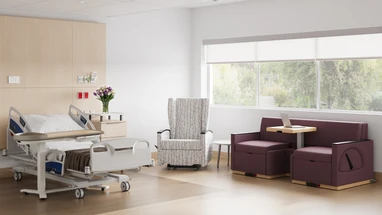
Selecting the right medical recliner for a clinical or outpatient environment is about more than comfort—it is an investment in patient safety, facility hygiene, and caregiver efficiency. Whether furnishing an infusion room, recovery area, or patient suite, understanding the functional and hygienic elements behind each chair ensures better outcomes and long-term reliability.
This guide highlights seven core features that healthcare professionals should consider when comparing patient room recliners, with insights drawn from Office Chairs USA’s extensive healthcare seating collection.
Office Chairs USA Medical Recliners
Office Chairs USA supports hospitals, clinics, and therapy centers with ergonomic, clinical-grade seating built for the demands of healthcare environments. Our curated selection includes medical recliners, sleeper chairs, and infusion seating—each designed for durability, patient comfort, and compliance with infection-control standards.
Customers receive more than just access to products. Our team provides individualized guidance, material samples, and live human assistance to help facility planners select finishes and upholstery that align with each department’s hygiene and design goals. Explore our medical recliners and sleeper chairs to discover healthcare seating thoughtfully tailored to professional care environments.
Positioning Range and Clinical Modes
A recliner’s positioning range defines how many supportive configurations it can achieve—from upright to full recline, including specialized modes for clinical care. Common modes include upright for consultations, semi-recline for relaxation, full-supine for rest, and advanced settings such as Trendelenburg (feet above heart) or zero-gravity.
Versatile positioning is essential in medical settings because it supports circulation, reduces pressure buildup, and aids post-operative comfort. For patients recovering from heart surgery or managing respiratory conditions like COPD, controlled positioning allows safe elevation of the chest and legs.
|
Position Mode |
Primary Benefit |
Best For |
|
Upright |
Facilitates conversation and assessment |
Consultations |
|
Semi‑Recline |
Promotes relaxation and comfort |
Infusion or rest |
|
Full‑Supine |
Enables lying flat |
Post‑procedure recovery |
|
Trendelenburg |
Elevates feet to aid circulation |
Emergency response |
|
Zero‑Gravity |
Balances pressure across the body |
Long‑term comfort |
Select recliners that synchronize back and leg motion for proper spinal alignment and allow quick shifts between entry, rest, and therapy positions without caregiver strain.
Motor Architecture and Control Options
The motor architecture determines how smoothly and independently a recliner’s components adjust.
-
Single‑motor designs move the backrest and footrest together—well‑suited for general patient use.
-
Dual or multi‑motor systems enable independent adjustment, ideal for medical applications that require precise positioning, leg elevation, or upright support during therapy.
Modern control systems let both patients and caregivers operate recliners easily. Prioritize models with handheld remotes, dual‑side controls, or foot switches for hands‑free use. Quiet motor function minimizes disturbance, while units that can be unplugged when idle support energy management.
Transfer and Safety Features
Safe patient transfers are non‑negotiable in healthcare environments. Medical recliners with well‑designed transfer and safety features protect both patients and caregivers.
Key features include:
-
Swing‑away or removable arms that simplify lateral transfers for users with limited mobility or bariatric needs.
-
Central locking casters and anti‑tip bases that stabilize the recliner during movement.
-
Reinforced assist handles that offer firm support for entry and exit.
Facilities that handle frequent admissions or emergency transports benefit from recliners that can be repositioned or locked quickly during patient transfer.
Cleanability and Infection Control Materials
Cleanability is among the most important factors in healthcare furniture design. High‑performing medical recliners use healthcare‑grade, bleach‑resistant upholstery and disinfectable surfaces to endure strict cleaning routines.
Materials should be:
-
Fluid‑proof and nonporous to prevent absorption.
-
Resistant to alcohol and bleach‑based disinfectants.
-
Constructed with removable cushions and panels for thorough sanitization.
Vinyls, polyurethane composites, and silicone‑coated fabrics are common for their durability and smooth surfaces. Every medical recliner offered by Office Chairs USA is selected for compatibility with modern infection‑control protocols while maintaining comfort and style.
Pressure Management and Ergonomic Padding
Extended patient sitting calls for advanced ergonomic support. Pressure management reflects how evenly a recliner distributes body weight to minimize pressure points that can lead to skin injury or circulation issues.
Recliners with layered foam or gel‑infused cushions, contoured lumbar regions, and pressure‑relief padding help maintain comfort during prolonged procedures or recovery. Some models feature gentle massage or vibration functions to encourage healthy blood flow—a beneficial feature in long‑term care. Matching recliner features to patient risk profiles promotes comfort and supports better clinical outcomes.
Durability, Certifications, and Warranty
Durability determines whether a recliner withstands continuous use in medical environments. Look for “clinical‑grade” construction with reinforced frames, metal components, and upholstery tested for wear and chemical exposure.
Certification labels such as CE, ISO, Greenguard, and FDA registration confirm compliance with recognized safety and performance standards. Warranties often range from three to eight years depending on manufacturer and component class. Office Chairs USA supports each recliner with accessible service, dependable supply partnerships, and extended product expertise to protect your investment over time.
Correct Size and Weight Capacity
Choosing the correct size ensures that every patient—from pediatric to bariatric—has adequate support and safety in use. Weight capacity defines the maximum recommended user weight, typically between 300–700 lbs. Seat width and height affect comfort and accessibility in both compact and bariatric models.
| Recliner Type | Weight Capacity | Seat Width | Recommended For |
|---|---|---|---|
| Standard Medical Recliner | 300-400 lbs | 20-22 in | General care units |
| Bariatric Recliner | 500-700 lbs | 26-30 in | Bariatric and surgical recovery |
| Compact Recliner | 250-300 lbs | 18-20 in | Outpatient and pediatric rooms |
Selecting the right fit enhances comfort, facilitates safe transitions, and reduces caregiver strain.
Frequently Asked Questions
What features improve patient comfort during long seating sessions?
Look for recliners with soft ergonomic padding, lumbar support, and pressure‑relief surfaces. Adjustable positioning and optional massage functions enhance comfort during extended treatments.
How do medical recliners support infection control protocols?
Clinical recliners use bleach‑resistant upholstery and easy‑clean components, allowing quick disinfection between patients and adherence to hygiene requirements.
What safety features are essential for patient transfers?
Choose recliners with swing‑away arms, anti‑tip bases, lift‑assist handles, and locking casters to streamline safe transfers for patients and caregivers.
Why is adjustability important for different medical treatments?
Adjustability allows staff to position patients for specific care needs, improving circulation, airway management, and post‑surgical recovery support.
How can I choose a medical recliner suitable for bariatric patients?
Select a recliner with reinforced framing, wide seating, and higher weight capacity to ensure safety and lasting comfort for bariatric users.
By understanding these seven essential features, healthcare facility planners can confidently specify medical recliners that align patient comfort, caregiver efficiency, and long‑term reliability. Explore the healthcare seating collection at Office Chairs USA to find clinical‑grade solutions tailored to your space.